
Facial Cleansing Water Spectrum – Just the Facts
Most conversations about skincare focus on what you put on your face—cleansers, serums, moisturizers, actives. But there’s a foundational element we rarely question, even though it touches our skin every single day:
The water we use to cleanse.
For homeowners and families who care about long-term wellbeing—not trends or excess—it’s worth asking a more thoughtful question:
Is the water coming out of your faucet actually supporting your skin… or quietly working against it?
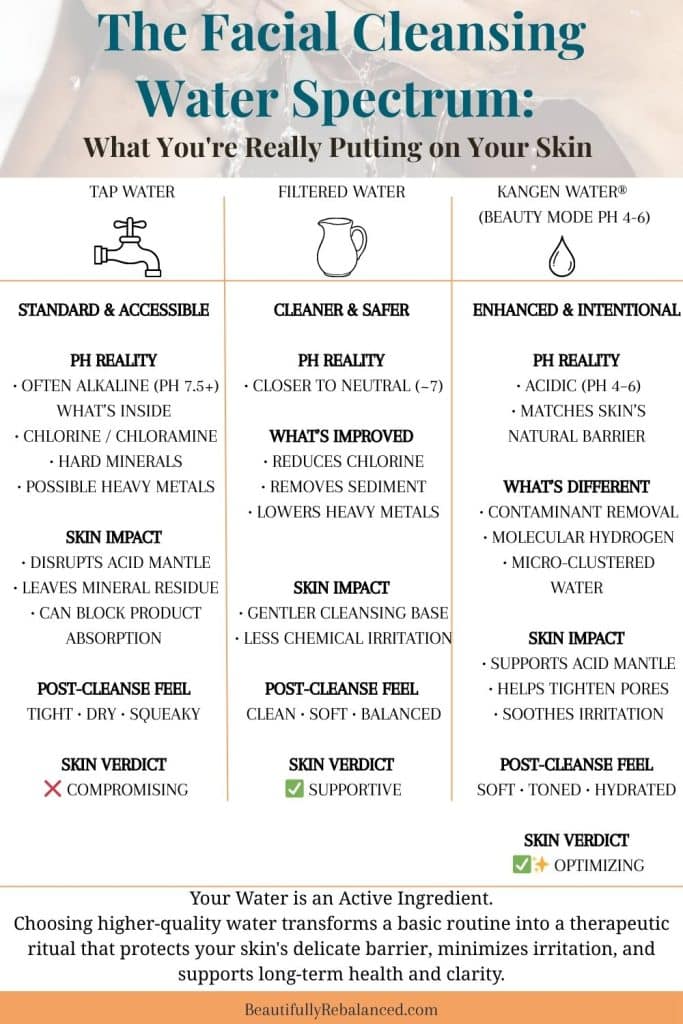
Water isn’t neutral. Its pH, mineral content, and chemical treatment all influence how your skin barrier functions, how well products absorb, and how your skin feels after washing. For some, this shows up as dryness or irritation. For others, it’s a lingering tightness, sensitivity, or the sense that even high-quality skincare never quite delivers the results it should.
Understanding this doesn’t require adding more products or overhauling your routine. It starts with awareness.
The infographic below breaks down how different types of water interact with your skin—so you can make informed, wellness-aligned choices without adding complexity to your routine.
If this comparison sparked new awareness, you’re not alone. Many people are surprised to learn how something as simple as water quality can influence skin comfort, clarity, and long-term balance. Exploring intentional water solutions isn’t about chasing perfection—it’s about supporting your body with fewer inputs and more alignment.
If you’d like to learn how elevated water can fit naturally into a whole-home or family-centered wellness approach, you’re welcome to explore further resources or join my email list for thoughtful insights—shared gently, without pressure.