Is Kangen Water Worth It? A Clear Way to Decide
Affiliate disclosure: I'm an Enagic affiliate. If you purchase through my links, I may earn a commission. This post reflects my honest experience and opinion.
There's a point in the water research rabbit hole where you stop looking for more information.
Not because you've seen everything — but because you've seen enough to realize you're not actually looking for information anymore. You're trying to make a decision. And somehow, the more you read, the less certain you feel.
If that's where you are, this post is for you.
I'm not going to give you another feature comparison or a list of reasons why Kangen water is superior to everything else. I've written those posts. What I want to do here is give you a more honest framework for answering the question you're actually asking:
Is this worth it for my household specifically?
Quick Takeaways
- “Is it worth it?” is the wrong question — the right question is “what problem am I trying to solve, and how completely do I want to solve it?”
- A Kangen water system is not a filter replacement — it's a different category of decision, and comparing it to a $50 pitcher filter will always make it seem expensive
- The four questions in this post are more useful for making this decision than any feature list or comparison chart
- Personal experience with these systems varies — what I noticed in our household is my experience, not a guarantee of yours
- The people who feel most aligned with this investment tend to be those who want one decision that holds rather than continued incremental upgrades
The Real Reason Most People Stay Stuck
Most people researching Kangen systems have already spent money on water. A pitcher filter at some point. Maybe a countertop unit. Some of us went further — I convinced my husband to install a full reverse osmosis system under our kitchen sink after learning what was in our tap water. We were committed.
And some of those things helped. But there was always something still not quite right. Something that had us still adjusting, still supplementing, still noticing that the problem wasn't fully solved.
So the hesitation when evaluating a Kangen system isn't usually “does water quality matter?” By the time you've done this much research, you know it does. The hesitation is more like: “What if I spend real money on this and it's still not the answer?”
That's a legitimate place to be. I was there. And I think the way out of it isn't more information — it's more honest self-assessment.
Four Questions That Actually Help
1. Am I still managing my water?
Not in the dramatic sense — but honestly. Are you still adding things? Hydration supplements, water flavor drops, special filters, products to compensate for what your water is doing to your skin or hair? Are you still second-guessing whether what you have is good enough?
If the answer is yes, your current setup isn't complete. That doesn't automatically mean a Kangen system is the answer — but it does mean you haven't solved the problem yet.
2. Do I want to keep revisiting this?
Be honest here. Are you okay replacing filter cartridges every few months, evaluating new options as they come out, staying loosely in research mode indefinitely? Some people genuinely are — they enjoy the optimization process and don't mind iterating.
Others — and I'm in this camp — want to make one good decision and be done with it. Not cheap forever. Done forever. If you're in the second group, that changes how you should be evaluating cost.
3. What does “simpler” actually look like for my household?
Not cheaper upfront. Simpler. Fewer inputs, fewer decisions, fewer things to manage, fewer products compensating for what your water is doing.
This is where Kangen systems tend to shift the equation for households that actually use all five water types. It's not that the machine is inexpensive — it isn't. It's that it has the potential to reduce the number of other things you're buying and managing, which changes the long-term math.
4. Does this replace more than it adds?
This is the most important question for a high-ticket system. A good system shouldn't make your life more complicated — it should consolidate it. When you're evaluating whether this makes sense for your household, ask whether it replaces multiple things you're already spending time and money on, or whether it just adds to the pile.
What I Actually Noticed After Switching
I want to share this carefully, because Enagic's compliance guidelines are clear that personal testimony is not medical evidence and my experience is not a guarantee of yours. What I notice may be completely different from what you notice, and I'm not using this as a sales pitch — just as honest context from someone who's been living with this system.
With that framing in place: here's what changed in our household.
We stopped buying hydration supplements and electrolyte powders — the water felt satisfying to drink without them. We eliminated several skincare subscriptions because my skin adjusted and I needed fewer compensating products. Our cleaning cabinet got noticeably simpler as we started using the Strong Kangen and Strong Acidic water for kitchen and surface cleaning. My indoor garden plants are visibly healthier — I use the water from the machine for them too.
The RO system that used to live under our sink is gone. Which means no more filter change reminders, no more checking for the slow leak we discovered behind the cabinet, no more wondering whether the remineralization cartridge was doing enough. That particular kind of mental overhead just evaporated.
I also noticed things I'm more hesitant to describe precisely because they're harder to separate from other variables — energy, focus, how I feel day to day. I don't want to attribute everything to the water because life has a lot of inputs. What I can say is that in the months since switching, I've felt more consistently well than I had in the period before, and the water is part of what changed. Make of that what you will.
None of this is typical or guaranteed. The Enagic earnings disclosure is available at enagic.com, and I'd encourage you to approach personal testimonials — including mine — with the same healthy skepticism I'd want you to apply to everything.
Who This Investment Tends to Make Sense For
Not everyone will feel aligned with this kind of purchase, and that's genuinely fine. From what I've seen, it tends to resonate most with people who:
Think in long-term outcomes rather than short-term fixes. Value having something solved rather than perpetually improved. Prefer one integrated system over several partial solutions layered together. Have already been through enough water upgrades to know what they don't want to keep doing.
If you're someone who genuinely enjoys the optimization process and doesn't mind iterating, a less expensive system that you revisit periodically might actually suit you better. I'd rather you make the right decision for your household than the one that earns me a commission.
So — Is It Worth It?
There isn't a universal answer, and I'd be skeptical of anyone who tells you there is.
What I can tell you is how I'd think through it: if you're looking for the lowest upfront cost, a single-use solution, or something you plan to replace in a few years, a Kangen system probably won't feel worth it — and it shouldn't be your choice. There are better options for that set of priorities, and I've covered them honestly in the 7 water filtration systems comparison.
If you're looking for a long-term system that addresses multiple daily water uses, you're tired of the incremental upgrade cycle, and you want to make one decision that holds — then it tends to feel worth it to the people who make it with clear eyes and realistic expectations.
The clearest sign that you're ready to make this decision is usually when the question stops being “is this worth it theoretically?” and becomes “am I done managing this, or not?”
If You're Still Thinking It Through
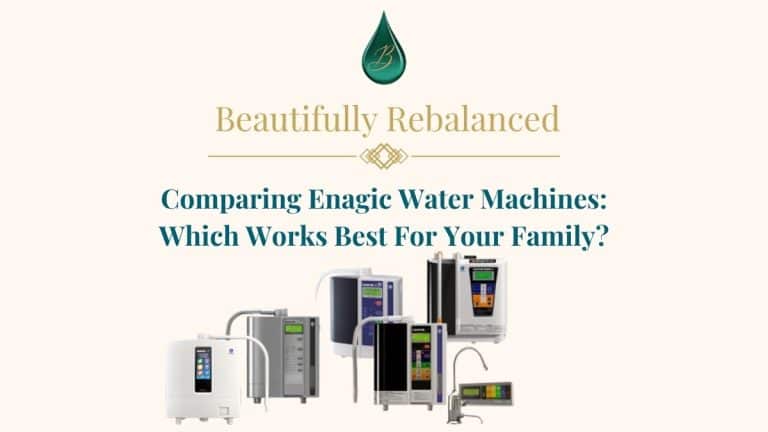
The K8 review covers the specific machine our family uses, including the honest cost breakdown and limitations. The Kangen vs RO comparison addresses the most common alternative people are evaluating. And the systems comparison page helps you figure out which Enagic model fits your household if you've decided you want to go this direction.
Or if you'd rather talk through your specific situation:
Download the Water Quality Guide →
Related reading: