Enagic K8 Review: What I Actually Think After Using It in Our Home
I want to be upfront with you before anything else: I'm an Enagic affiliate. That means if you purchase through my links, I earn a commission. I'm telling you that because I think you deserve to know it — and because I also believe you're smart enough to evaluate an honest review even knowing that.
What I'm going to give you here is what I actually think, based on what I've actually experienced. Not a sales pitch. Not a carefully worded maybe. A real review, with the specifics you need to make an informed decision for your own family.
If you've already read through the water filtration systems comparison on this blog, you know that the K8 is one of seven types of systems I covered — and that I approached it as objectively as I could alongside the others. This post goes deeper on the K8 specifically, because after going through a pitcher filter, a gravity filter, and a reverse osmosis system in our home, it's where we landed — and I want to explain why.
Quick Takeaways
- The Enagic Leveluk K8 is a countertop water ionizer that uses electrolysis to produce five distinct types of water from your tap, each with a different pH and a different household use
- It's manufactured in Japan by Enagic, an ISO 9001, ISO 13485, and ISO 14001 certified OEM manufacturer — meaning they make the machines themselves under strict quality control standards
- The K8 has 8 platinum-coated titanium plates, the highest plate count of any home Enagic model, which means higher antioxidant potential and more stable output at higher flow rates
- According to research published in BMC Proceedings, electrolyzed alkaline water provides better hydration than purified water in healthy adults — this is one of Enagic's approved claims (keeping in mind, the article referenced discusses electrolyzed alkaline water generically, not specifically water from the K8 machine)
- Electrolyzed alkaline water can help maintain oxidative balance in healthy individuals, according to research in Electronic Journal of Biotechnology (keeping in mind, this article discusses electrolyzed alkaline water generically, not specifically water from the K8 machine)
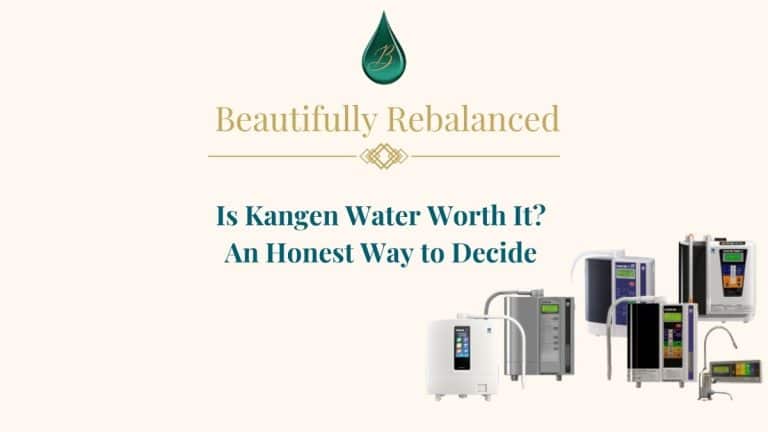
- The machine retails at $5,480 with a 5-year warranty (2026 price) — over a 5-year period, the annual cost of ownership including filter replacements is approximately $1,296/year for a family of four, compared to roughly $1,856/year for bottled water alone
- It significantly reduces plastic bottle waste — a family of four generates approximately 1,280 plastic bottles annually from bottled water alone
- This is not the right first purchase for every family — it's a meaningful investment that makes the most sense once you understand what it does and why
What the K8 Actually Is
“Kangen” is a Japanese word meaning “return to origin.” That's the philosophy behind the machine — the idea that we've moved far away from what water used to be before mass municipal treatment, and that returning to something closer to that is worth pursuing.
The Enagic Leveluk K8 is a countertop water ionizer that connects to your existing kitchen faucet via a diverter valve. Your tap water runs through a built-in filter first, which reduces chlorine and other contaminants. Then it goes through an electrolysis chamber containing 8 platinum-coated titanium plates, where an electrical current separates it into alkaline and acidic streams. You choose which type you want at any given moment.
It's manufactured in Japan at Enagic's own facilities — they're an OEM (original equipment manufacturer), meaning they don't outsource production. The machines carry ISO 9001 (quality management), ISO 13485 (medical device quality management), and ISO 14001 (environmental management) certifications, which matter if you care about manufacturing standards.
The Five Waters It Produces
This is where the K8 is genuinely different from a standard water filter — and where much of the value comes for families who actually use all five types.
Kangen Water® (pH 8.5, 9.0, or 9.5) — This is the alkaline drinking water. It's hydrogen-rich, meaning the electrolysis process produces dissolved molecular hydrogen in the water. Per Enagic, Kangen Water® provides better hydration than bottled or purified water and can help maintain oxidative balance in healthy individuals. It's also what most people in the Kangen world refer to simply as “Kangen Water.”
Clean Water (pH 7.0) — This is filtered but not ionized — just your tap water cleaned of chlorine and contaminants, at neutral pH. The recommended use is for taking medications, preparing baby formula, or preparing herbal infusions where you want filtered water without any pH adjustment.
Beauty Water (pH 4.0–6.0) — Slightly acidic water for external use only — not for drinking. As I've written about extensively in the skin and water series on this site, your skin's natural pH ranges between 4.5 and 5.5. Beauty Water falls right in that range, which is why it's designed for facial cleansing and toning. According to Enagic, Beauty Water has the same pH as many expensive skin toners, for a fraction of the cost.
Strong Kangen Water (pH 11.0+) — High alkaline water for cleaning purposes, not for drinking. It's excellent for washing produce (according to Enagic, it improves the taste and texture of fruits and vegetables), cutting through oil-based residue in the kitchen, and general food prep cleaning.
Strong Acidic Water (pH 2.5) — Highly acidic water with cleansing properties for surfaces and kitchen applications. Per Enagic, Strong Acidic Water has been shown to reduce contamination on foods and hard surfaces, reducing the need for expensive, caustic cleaning chemicals.
What Makes the K8 Different From Other Enagic Models
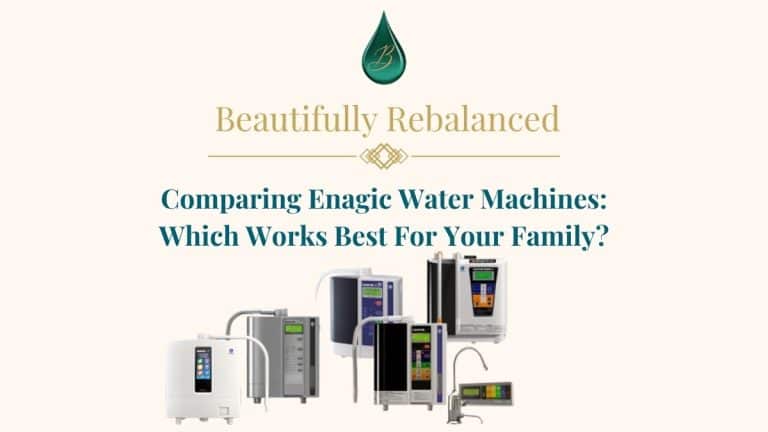
The full Enagic lineup ranges from the entry-level Leveluk JRIV at $3,280 to the commercial Super501 at $6,580. The K8, at $5,480, sits near the top of the residential line — and the difference comes down to one primary thing: plate count.
More plates mean more electrolysis surface area, which means more stable, consistent ionization at higher flow rates and higher antioxidant potential measured as ORP (oxidation-reduction potential). The K8 achieves a -850 ORP, the strongest of any home Enagic model. The SD501DX and SD501 Platinum (7 plates) reach -800 ORP. The JRIV (4 plates) reaches -450 ORP, and its charge doesn't hold as long.
For most families, the difference between the K8 and the SD501DX isn't dramatic in day-to-day use. The K8 pulls ahead if you're a larger household, if you use the water at higher flow rates, or if you want the absolute best antioxidant output the residential line can produce. It's also the only model with a touchscreen, auto on/off, and voice guidance in 8 languages — which matters for ease of daily use more than it might sound.
If you have a family of 6 or more and very high daily water usage, the Super501 (12 plates) may be worth considering instead — you can read more about how they compare on my systems comparison page.
The Cost Conversation (Done Honestly)
I'm not going to pretend $5,480 is a small amount of money. It isn't. And I think anyone who doesn't acknowledge that upfront is doing you a disservice.
What I will do is give you the math that Enagic provides and what I have personally noticed, because it's a legitimate way to think through the investment, even if it's not the only way.
A family of four spending $1.45 per person per day on bottled water — which is actually conservative — spends roughly $1,856 per year on bottled water alone. Over the K8's 5-year warranty period, that's $9,280 just in bottled water, not counting whatever else you're spending on hydration or electrolyte mixes, produce wash, and cleaning supplies.
The K8 amortized over 5 years comes to approximately $996/year in machine cost, plus roughly $260/year in filter replacements (two filters annually) and $40/year for periodic deep cleaning — totaling about $1,296/year. That's a savings of approximately $560/year compared to bottled water alone for a family of four, not accounting for reduced spending on other products the machine can replace. That also doesn't account for the fact that the K8 is reported to have a lifespan of 30 years.
This doesn't mean the upfront cost is easy. For families where cash flow is a real consideration, Enagic does offer financing, split payment options, and some buyers use 0% intro-rate credit cards or PayPal Credit to manage the initial purchase. Those are options worth considering.
What I'd caution against is making the decision solely on the cost comparison math, because your experience will depend entirely on whether you actually use the machine consistently. If you don't drink the water, wash produce with it, or use the beauty water, the math evaporates. The investment makes sense if it changes how your household actually functions — not just because the spreadsheet looks favorable.
What Our Experience Has Been
I've been transparent throughout this blog that we went through several water systems before arriving here — a pitcher filter, a gravity filter (which I had to stop using partly because of my health and the physical demands of the system), and a reverse osmosis system that cleaned our water thoroughly but left us feeling like we weren't getting hydrated no matter how much we drank.
What changed after switching was gradual. The hydration felt different — more satisfying, less like we were just going through motions. We noticed improvements in digestion and energy consistency. We stopped buying hydration additives and electrolyte supplements that we'd been using to make the RO water feel more effective. My skin routine was simplified by using the Beauty Water for cleansing and toning, which eliminated a step and a product.
I want to be careful here because Enagic's compliance guidelines are clear: personal testimony doesn't constitute medical fact, and I'm not making claims about what this water will do for you specifically. What I can tell you is what we've experienced, and that it's been significant enough that I'm not going back.
Honest Limitations
The K8 is not a whole-house system. Your shower water, your laundry, and every other tap in your home are on a regular supply. If shower water affecting your skin is a concern — and given everything in the skin and water series, it very reasonably could be — you'd need to look at a shower filter separately.
It also doesn't address water hardness upstream of the machine. If you have very hard water, you may need a pre-filter to protect the electrolysis plates and get the best performance. The Enagic troubleshooting guide covers this, and your water mentor or Enagic support can help you evaluate whether a pre-filter makes sense for your specific water.
Frequently Asked Questions
How does installation work? The K8 connects to your existing kitchen faucet via a diverter valve that comes with the machine. Most installations are straightforward and don't require a plumber. If your faucet has an unusual fitting, your water mentor can walk you through adapters. My personal setup is the water machine attaches directly to my RO system (using the RO system as a pre-filter). I've moved mine between our home and RV without any issues, so I do have personal experience proving its portability.
What maintenance does it need? Filter replacement approximately once a year (the machine alerts you when it's time), allowing the automatic cleaning cycle to run as prompted, and a periodic deep cleaning at an Enagic service center — recommended annually for heavy use. The machine's self-cleaning feature runs after 15 minutes of use and when it's been idle for 24 hours, which takes care of most of the day-to-day maintenance automatically.
How long will it last? With proper care and maintenance, many owners report 30 years of use. The manufacturer's warranty is 5 years.
Does it work with hard water? The machine works with most water sources, but very hard or acidic well water may require a pre-filter to produce optimal output. Your water mentor can help you evaluate your specific water before purchase, which I'd recommend doing if you have any concerns.
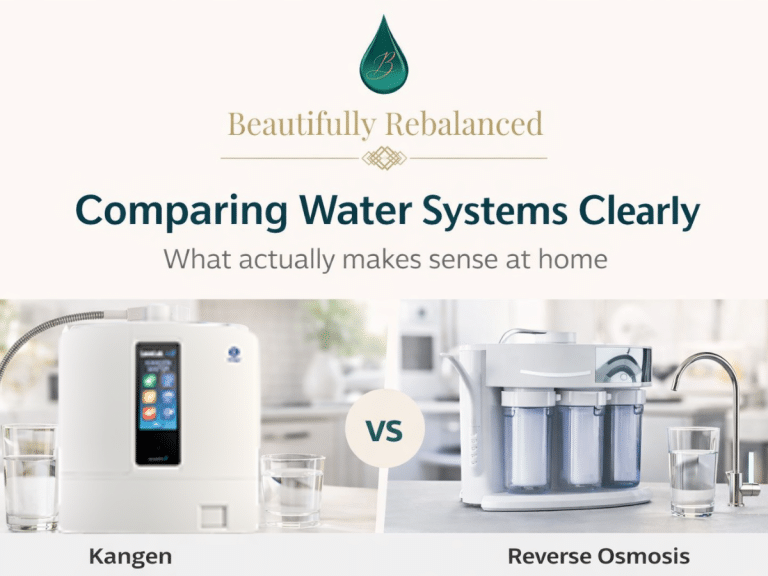
Can this replace a reverse osmosis system? They do different things. RO focuses on removing a very wide range of dissolved contaminants and producing highly purified water. An ionizer focuses on electrolysis and producing functional water types. Some households — mine included — have used both. Whether you need RO upstream of an ionizer depends on your specific water quality situation.
Is financing available? Yes, Enagic offers a financing program with monthly payments. There is a $20/month handling fee and an application process. It also offers a split-payment program or a direct bank account ACH payment option. Some buyers also use 0% introductory credit cards or PayPal Credit for the initial purchase. Results and eligibility vary.
What if the K8 isn't the right model for my household? The SD501DX and SD501 Platinum are very solid options at a lower price point, and for singles or couples, the JRIV is an entry-level option. The systems comparison page walks through how to think about which model fits your household size and usage.
Your Next Steps
If you want to go deeper before making any decision, the Water Quality Guide is a good place to start — it walks through evaluating your home's specific water and thinking through which level of improvement makes sense for your situation.
Download the Water Quality Guide →
If you're ready to compare the K8 against other Enagic models side by side:
If you'd like to talk through your specific household situation before making any decision:
And if you've done your research and you're ready:
Purchase the K8 Through the Official Enagic Website →
Related reading: