Kangen Water vs Reverse Osmosis: An Honest Comparison
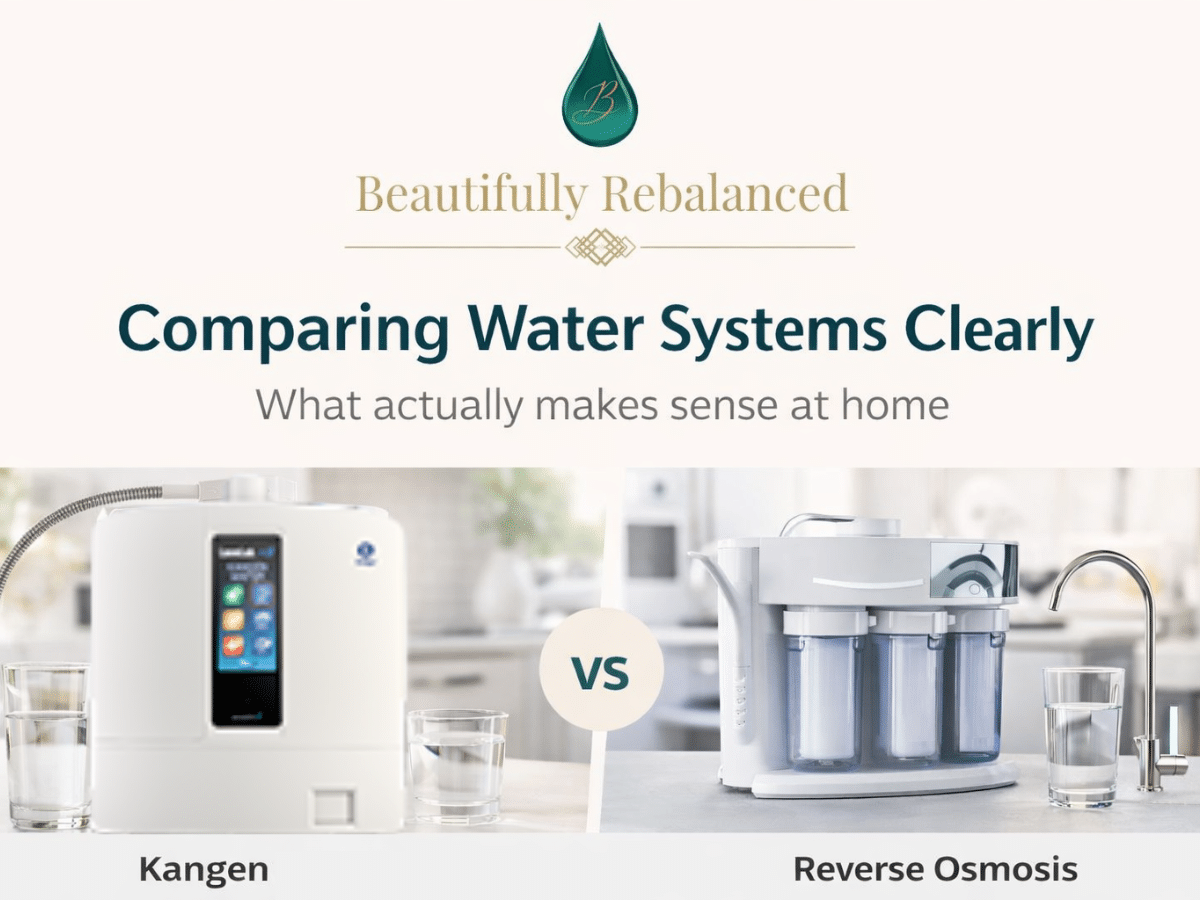
If you've been researching home water systems for any length of time, you've almost certainly hit this comparison. Kangen water vs reverse osmosis. They come up together constantly, and at first glance it seems like a straightforward head-to-head — two systems competing for the same job.
But that's actually where the confusion starts. They're not competing for the same job. They're built around fundamentally different philosophies about what water should do, and once you understand that distinction, the comparison becomes much simpler.
I spent years on the RO side of this debate before making the switch. I had an RO system with a remineralization stage, which I thought covered all the bases. It did a lot of things well. But there was something it couldn't address — and I didn't have the framework to understand why until I started looking more carefully at what was actually different about how these two systems work.
This article is my honest breakdown of both. No hype, no false equivalence, no pretending one is universally better for everyone.
Quick Takeaways
- Reverse osmosis and Kangen water systems are built around different goals: RO focuses on removing as much as possible from your water; a Kangen ionizer focuses on what the water can do across multiple uses
- RO produces one type of highly purified, low-mineral water; a Kangen ionizer produces five distinct water types with different pH levels for different household purposes
- Research suggests that electrolyzed alkaline water rehydrates healthy adults after exercise more effectively than purified water — relevant context for the RO vs Kangen hydration question
- RO removes both contaminants and beneficial minerals; many systems add a remineralization stage to compensate, but the mineral profile differs from naturally mineralized water
- RO wastes several liters of water per liter produced; Kangen systems produce minimal water waste and the acidic bywater can be repurposed for cleaning and other household uses
- Neither system is universally better — the right choice depends on your water quality, household size, how you use water daily, and what problem you're primarily trying to solve
- For households with serious contamination concerns (heavy metals, nitrates, specific chemical contaminants), RO's deep purification is genuinely valuable; for households prioritizing hydration quality, multi-use functionality, and long-term simplicity, a Kangen system addresses a broader range of daily needs
Two Different Philosophies
This is the frame that makes everything else make sense.
Reverse osmosis is a subtraction system. It works by pushing water through a semi-permeable membrane that filters out contaminants, dissolved solids, heavy metals, fluoride, chlorine, and most everything else — including naturally occurring minerals. The result is water that's been stripped down to as close to pure H₂O as a home system can achieve. Many modern RO systems add a remineralization cartridge afterward to restore some mineral content and improve taste, but the fundamental process is one of removal.
A Kangen ionizer is a functional system. It starts with filtration — removing chlorine and impurities — and then uses electrolysis to separate water into alkaline and acidic streams. The minerals already present in your tap water are retained and utilized in this process; they're what makes electrolysis work. The output isn't one type of water but five, each with a different pH calibrated for different uses. The goal isn't maximum purity — it's maximum utility.
Understanding this distinction clears up most of the confusion in this comparison. People often ask “which one produces cleaner water?” But that's only the right question if purification is your primary goal. If your goal is water that does more things well across your daily life, you're asking a different question entirely.
Side-by-Side Comparison
| Feature | Reverse Osmosis | Kangen Ionizer |
|---|---|---|
| Primary Function | Removes contaminants | Produces functional water types |
| Water Types Produced | One (purified) | Five (alkaline, neutral, acidic, strong alkaline, strong acidic) |
| Mineral Content | Removed (often remineralized) | Retained and utilized |
| Filtration | Deep multi-stage membrane filtration | Pre-filter for chlorine and impurities |
| Water Waste | 3–4 gallons wasted per gallon produced | Minimal; acidic bywater is reusable |
| Best For | Maximum purification, heavy contamination | Multi-use household function, hydration quality |
| Upfront Cost | $200–$600 | $3,530–$7,080 depending on model |
| Ongoing Cost | Filter/membrane replacement every 6–12 months | Filter replacement ~annually; deep cleaning annually |
| Works With Hard Water | Removes hardness minerals | Requires minerals to function; hard water may need pre-filter |
What Each System Is Actually Good At
Where RO Genuinely Excels
RO is the most thorough point-of-use purification technology available for home use, and for households with specific contamination concerns, that thoroughness is genuinely valuable.
If your water report shows significant heavy metal contamination, high nitrate levels, or specific chemical contaminants that standard carbon filtration doesn't fully address, RO is one of the most effective solutions. It's also worth considering for households on well water with an inconsistent or compromised source, where the wide-spectrum removal capability provides a reliable safety floor.
NSF/ANSI Standard 58 covers RO systems and verifies contaminant-reduction claims — worth considering when evaluating specific products.
The limitations are worth being honest about, too. RO systems produce wastewater — typically 3–4 gallons rejected for every gallon of purified water produced, which adds up meaningfully over a year and matters both from a water stewardship and cost perspective. The membranes are sensitive to hard water and require more frequent maintenance in hard water areas. And because the water is demineralized, it behaves differently than naturally mineralized water in ways that some people notice and others don't — though this is an area where individual experience varies.
Where a Kangen System Excels
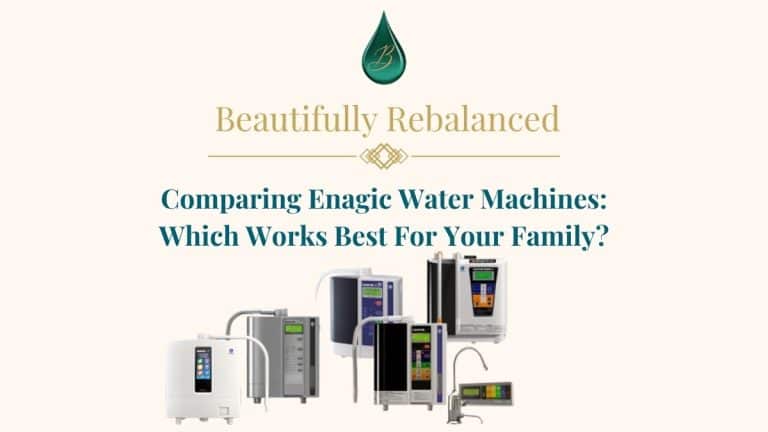
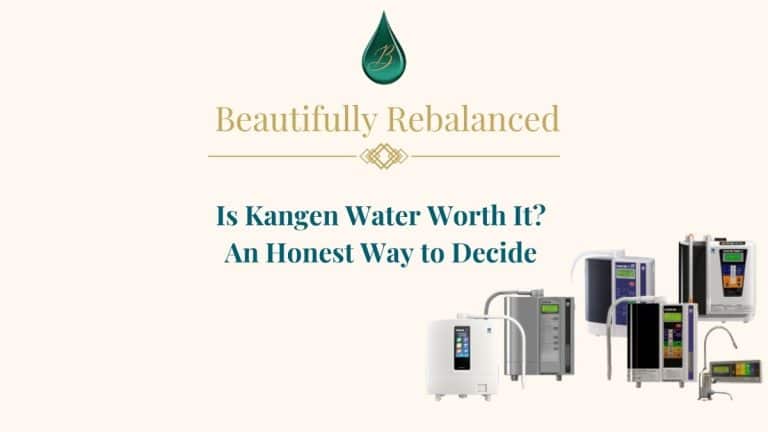
The K8 and other Enagic ionizers aren't primarily purification devices — they're functional water production systems. That's a different value proposition, and it's worth understanding clearly before evaluating the cost.
The five water types a Kangen machine produces each serve a specific purpose:
Kangen Water® (pH 8.5–9.5) is alkaline drinking water. It provides better hydration than bottled or purified water and can help maintain oxidative balance in healthy individuals. A study in BMC Proceedings found that electrolyzed alkaline water rehydrated healthy adults more effectively after exercise than purified water. While this study didn't specifically review Enagic's Kangen Water machine, the information on electrolyzed alkaline water is a relevant context for the RO vs. Kangen hydration comparison.
Clean Water (pH 7.0) is filtered but not ionized — neutral water for medications and baby formula.
Beauty Water (pH 4.0–6.0) matches your skin's natural pH range (4.5–5.5), making it appropriate for facial cleansing and toning — a direct replacement for water cleansing, toners, and pH-balancing skincare steps.
Strong Kangen Water (pH 11.0+) emulsifies oils and is effective for washing produce and cutting kitchen grease without chemical cleaners.
Strong Acidic Water (pH 2.5) has been shown to reduce contaminants on hard surfaces and food, reducing the need for chemical sanitizers.
The multi-use capability is where the long-term cost math shifts. When you're replacing not just a water filter but also a produce wash, a face toner, a surface cleaner, and a set of cleaning products, the upfront investment starts looking different when calculated against what it replaces over several years.
The Honest Conversation About Cost
This comparison almost always comes down to cost eventually, and I want to address it directly.
Reverse osmosis is a significantly lower upfront investment — $200 to $600 for most under-sink units, with ongoing filter and membrane costs of roughly $100–$200 annually. For a household whose primary need is improved drinking water purity, it's an efficient and affordable choice.
Kangen systems range from $3,530 for the entry-level JRIV to $5,890 for the K8. That's a meaningful investment, and I'd be doing you a disservice to gloss over it.
The way I'd encourage thinking about it: RO solves a narrower problem very well at a lower cost. A Kangen system solves a broader set of problems — drinking water quality, hydration, skincare water, cleaning water, produce washing — at a higher upfront cost that may reduce ongoing spending across multiple product categories.
The K8 cost comparison I covered in the K8 review shows that a family of four spending conservatively on bottled water alone ($1,856/year) pays approximately $1,478/year in annualized K8 ownership costs — a modest savings that grows significantly when you factor in other products the system replaces. That math won't be the same for every household, but it's a more complete picture than comparing sticker prices.
It is also worth noting that RO wastewater cannot be used for other applications. It's discarded directly into your drain. Enagic's Kangen water machines have a discharge hose that goes to your sink, and the discarded water is able to be collected and used in other capacities (like watering plants, basic cleaning, etc.)
Can You Use Both?
Yes — and some households do.
RO upstream of a Kangen machine is not recommended because RO removes the minerals that electrolysis requires to function. But having an RO system at a dedicated drinking water tap and a Kangen machine at the main kitchen tap, or using RO for specific high-contamination concerns while using a Kangen machine for daily household use, are approaches some people take depending on their specific water quality situation.
Worth noting: if your tap water has very high contamination levels, a pre-filter before the Kangen machine may be more appropriate than combining RO and ionization. Your water quality report is the starting point for that conversation.
If you choose to use an RO system before the Kangen machine, make sure it includes a remineralization component.
Which One Is Actually Right for You?
RO may make more sense if: Your primary concern is maximum purification of a specific contamination issue. You have well water or a highly compromised source. Your budget doesn't currently support a larger system investment, and you want a solid baseline improvement. You primarily need better drinking water and aren't looking to address multiple household water uses.
A Kangen system may make more sense if: You want water that functions across multiple daily uses — drinking, cooking, skincare, cleaning, produce washing, plant care, etc. You're tired of the layering effect of adding products to compensate for water-related frustrations. You've already been through one or more incremental upgrades and still feel like something is missing. You're thinking about water as a long-term household investment rather than a single-purpose filter purchase.
If you're still sorting through which situation describes you, the 7 water filtration systems comparison covers the full landscape — including where both RO and ionizers fit within a broader framework.
Related reading:
- 7 Water Filtration Systems Compared: What Each One Actually Does
- Enagic K8 Review: What I Actually Think After Using It in Our Home
- How I Finally Chose a Home Water System
- Why We Kept Upgrading Our Water (And What Finally Made Us Stop)